
Reviewed · MUSEUMS
Las Vegas Mob Museum Admission Ticket
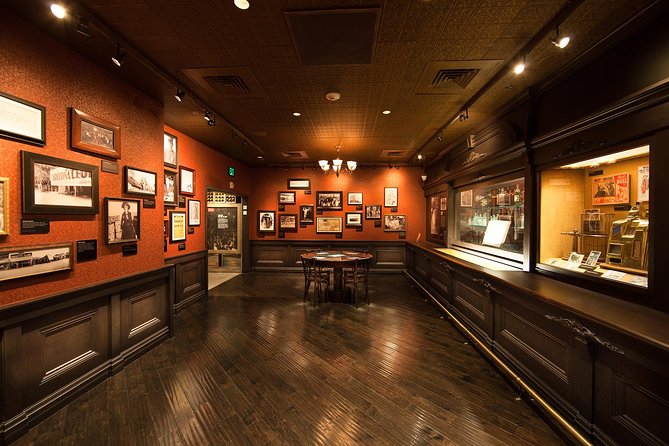
The most gripping part of the Mob Museum is that it puts crime and law enforcement in the same frame. You move from Al Capone and Lucky Luciano to FBI surveillance, courtroom testimony, weapons training, and the people who helped bring organized crime down. The old federal courthouse setting gives the subject real weight.
I like the original artifacts, especially the Tommy gun, gas chamber chair, and St. Valentine’s Day Massacre wall. I also like the courtroom where the Kefauver hearings took place, since it turns a lesson in organized crime into a place you can actually stand in. The main drawback is the amount of reading and video. If you rush, you will miss much of what you paid for.
In This Review
- Key points to know before you go
- A former courthouse with a serious story to tell
- Third floor: the birth and growth of organized crime
- The St. Valentine’s Day Massacre wall and real evidence
- The courtroom where organized crime faced public scrutiny
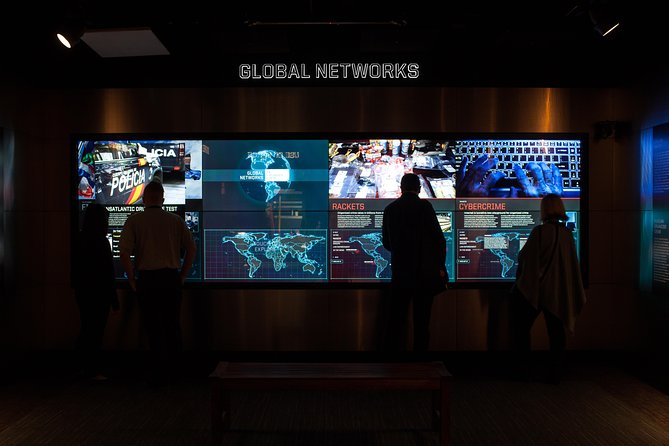
- Law enforcement exhibits, surveillance, and weapons training
- Las Vegas, politicians, and the Mob’s wider reach
- The Underground: cocktails, moonshine, and Prohibition
- How long to allow, and when to arrive
- Price, transport, and practical value
- Who will enjoy this museum most
- Should you book the Mob Museum?
- FAQ
- What are the opening hours of the Mob Museum?
- How long does a visit to the Mob Museum take?
- Do I need to use my ticket at a specific time?
- Is The Underground included with museum admission?
- Are children allowed at the Mob Museum?
- Can I take photographs inside the museum?
- Is parking available at the Mob Museum?
Key points to know before you go
- Start on the third floor: Work downward through the museum to follow its intended timeline.
- Plan two to four hours: A quick visit can take about an hour, but careful readers and history fans may want most of an afternoon.
- Hear a former mob family member: Frank Calabrese Jr. sometimes gives talks in the courtroom, though speaking schedules can change.
- Save time for The Underground: The Prohibition-era speakeasy and distillery make a good break, but food, cocktails, and moonshine cost extra.
- Expect adult subject matter: Crime-scene images, violence, executions, and frank accounts of organized crime make this better suited to older children and adults.
- Book a timed entry: Arriving at the selected time can help you avoid the longer lines that form during the busiest part of the day.
A former courthouse with a serious story to tell
The Mob Museum, officially called the National Museum of Organized Crime and Law Enforcement, occupies a former federal courthouse in downtown Las Vegas. The building is listed on the National Register of Historic Places, and that setting matters. You are not entering a casino attraction dressed up with a few mob photographs. You are walking through a place tied to the federal justice system.
The museum sits only a short walk from the Fremont Street Experience. That makes it easy to pair with downtown sightseeing, and it offers a welcome change from the Strip’s casinos, shows, and shopping. You can visit in the morning, spend the afternoon with the exhibits, then step out near Fremont Street for dinner and evening entertainment.
The museum covers three main floors, with The Underground in the basement. The intended route begins on the third floor and works downward. Follow that order if you can. One visitor accidentally began at the bottom and found the story harder to follow, since later events appeared before earlier ones.
More Las Vegas museums and exhibits:
- Ticket for ARTE Museum Las Vegas
★ 5.0 · 2,106 reviews - Madame Tussauds Wax Museum Las Vegas
★ 4.4 · 601 reviews - Titanic: The Artifact Exhibition at the Luxor Hotel and Casino
★ 4.5 · 350 reviews
Third floor: the birth and growth of organized crime
Begin upstairs, where the museum traces the rise of organized crime. The displays connect famous figures, illegal enterprises, political influence, and the social conditions that allowed criminal networks to grow. You will encounter names such as Al Capone, Lucky Luciano, John Gotti, and other notorious figures on the Wall of Infamy.
The museum does not treat these people as movie stars. It shows how violence, bribery, gambling, bootlegging, and business interests worked together. That distinction is important. Popular films often turn gangsters into colorful characters, while the exhibits keep returning to victims, corruption, and the law enforcement response.
You will see hundreds of objects and multimedia displays. Some sections rely on reading, while others use sound, video, photographs, and interactive stations. I recommend allowing more time than you first expect. The route is easy to walk, but the amount of information can be dense.
This floor is especially useful if you know the Hollywood version of the Mob but not the historical background. It fills in the connections between national crime networks and Las Vegas, showing how gambling profits and political influence helped shape the city.
The St. Valentine’s Day Massacre wall and real evidence
The St. Valentine’s Day Massacre wall is one of the museum’s most memorable displays. It presents the event as a crime investigation rather than a gangster legend, giving you a sharper sense of the violence behind the headlines.
Other artifacts include a Tommy gun and the Nevada gas chamber chair. These objects are difficult to see without thinking about the human cost of the crimes and punishments discussed nearby. The museum’s subject is not light, and some exhibits contain graphic images and disturbing material.
Photography is permitted, but flash is not allowed. You also need to keep walkways and exhibit entrances clear. That is sensible here, since several displays use screens and audio, and blocking them can disrupt the experience for everyone around you.
The museum’s strength is its use of physical evidence. A photograph can feel distant. A weapon, courtroom, surveillance recording, or prison-related object gives the story a more direct connection to real events.
The courtroom where organized crime faced public scrutiny
One of the best rooms is the preserved courtroom used for the 1950 Kefauver hearings. Senator Estes Kefauver’s hearings examined organized crime and brought businessmen, politicians, and mob figures into public view. The room gives the subject a civic and legal context that a standard gangster museum would lack.
You can sit in the courtroom and watch a presentation about the hearings. The effect is stronger than reading a plaque in a hallway because the room itself becomes part of the exhibit. You can picture the public drama of witnesses being questioned and officials trying to explain how crime networks operated.
The courtroom may also host talks by special speakers. Frank Calabrese Jr., a former mob family member, has spoken there about his experiences and appeared for book signings. His presentation can add a personal perspective that the museum’s general exhibits cannot provide. Check the schedule when you arrive, since talks are not something you should assume will take place during every visit.
If you happen to find a speaker scheduled during your visit, allow extra time. A talk can last around 40 minutes, and longer presentations can change your timing for the rest of the museum.
A few more Las Vegas days worth comparing
- Las Vegas Strip: The High Roller at The LINQ Ticket
★ 4.6 · 4,266 reviews - High Roller Wheel Admission Ticket at The LINQ
★ 4.5 · 3,379 reviews - Las Vegas: STRAT Tower Observation Deck Ticket
★ 4.5 · 1,469 reviews - Las Vegas: High Roller Entry Ticket with In-Cabin Open Bar
★ 4.6 · 1,278 reviews
Law enforcement exhibits, surveillance, and weapons training
The museum gives law enforcement nearly as much attention as the criminals. You will learn how investigators built cases, tracked money, gathered testimony, and worked to break up organized crime operations. The story becomes a long contest between secrecy and evidence.
Real FBI surveillance tapes are among the more effective displays. Hearing actual voices makes the process feel less polished than a television crime drama. You get a sense of how investigators listened, waited, and pieced together information over time.
The FBI weapons training section adds an interactive element. It is a useful change of pace after the text-heavy exhibits, though the museum is still primarily a self-guided history experience rather than a guided tour. Extra activities such as the Crime Lab Experience and Use of Force Experience are not included with the basic admission ticket.
An audio tour may be available for a small extra fee. Ask at the box office if you prefer narration, especially during busy periods when video stations and reading areas may be crowded. The free mobile app also provides an interactive map, exhibit information, self-guided tours, and missions connected to organized crime and law enforcement.
Las Vegas, politicians, and the Mob’s wider reach
The museum is at its best when it moves beyond famous gangsters. Exhibits explore the relationship between organized crime and Las Vegas, including the city’s gambling economy and the business interests that helped it grow.
You will also find material on Jimmy Hoffa’s connections to organized crime and on the Mob’s alleged involvement in the assassination of a president. These sections widen the story beyond Sin City. The point is not simply that gangsters once operated casinos. It is that organized crime touched labor, politics, business, policing, and national affairs.
I found this broader angle more useful than a room filled only with gangster portraits. It explains why law enforcement spent decades pursuing these networks and why organized crime remains a subject of public interest.
The museum also brings the story up to current headlines, showing how organized crime has changed rather than suggesting that it simply vanished. That keeps the experience from becoming a nostalgic tour of old Las Vegas.
The Underground: cocktails, moonshine, and Prohibition
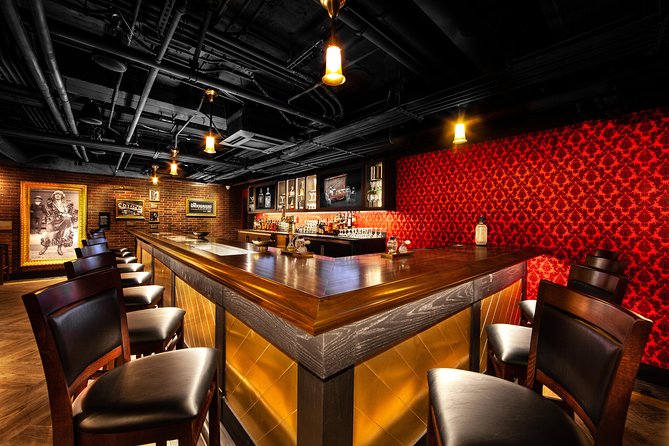
End downstairs at The Underground, a Prohibition-era speakeasy and distillery. The space uses period-style decor and artifacts to explain bootlegging, illegal drinking, and the social world created by Prohibition.
Admission to The Underground is included, but drinks and food are not. You can order cocktails, shareable dishes, coffee, and other refreshments. The museum also makes its own house-distilled moonshine, and flavored versions are available for purchase.
The Underground is open to museum visitors of all ages before 5 PM. After 5 PM, the space is for people 21 and older, and you must be 21 or older to eat or drink there. The distillery is also restricted to those 21 and over.
You do not need to drink to enjoy the room. If you skip the bar, it still works as a themed final stop and a place to rest after the exhibits. If you do want a cocktail, budget extra money and time. A drink and appetizer can turn a three-hour museum visit into a longer afternoon.
The speakeasy is also useful as a break in the middle of your visit, not only at the end. Just remember the museum’s historical sequence may be easier to follow if you first complete the upper floors.
How long to allow, and when to arrive
The official estimate is about three hours, but your pace will decide the result. I would allow at least two hours for a focused visit and three to four hours if you read most panels, watch the presentations, try the interactive sections, visit The Underground, or attend a special talk.
A quick visit can be done in about an hour, but that approach favors the major objects over the museum’s argument. If you want to understand how organized crime developed and how investigators dismantled it, give yourself an afternoon.
The museum is generally open daily from 9 AM to 9 PM, while The Underground generally operates from noon until midnight. Hours can change, so check the official website before setting out.
The busiest period is usually between 11 AM and 4 PM. A timed ticket is useful during those hours, since you arrive for a selected entry time rather than simply joining the general line. Arrive a few minutes early, as the ticket must be used at the reserved time.
Price, transport, and practical value
At $34.95 per person, basic admission is not a bargain-hour attraction, but it can be good value if you like history, crime investigations, or Las Vegas beyond the casino floor. The museum is large enough to occupy several hours, and the ticket includes all three museum floors and admission to The Underground.
The price becomes less attractive if you only want a few famous photographs or plan to stay for 45 minutes. In that case, the museum may feel expensive. If you read the exhibits, listen to the recordings, use the interactive stations, and possibly attend a courtroom presentation, the cost makes more sense.
Paid parking is available at the museum, with nearby overflow options if the main lot fills. Check signs carefully, especially in overflow areas, since parking restrictions can be easy to miss. The Downtown Loop free shuttle stops outside, and the RTC Deuce bus connects downtown with several points on the Strip.
The building has an elevator and a lift at the front. Public restrooms are available on every floor, including the basement.
Who will enjoy this museum most
I would recommend the Mob Museum to adults, history fans, crime-documentary followers, and anyone who wants a substantial break from casino life. You do not need prior knowledge of Al Capone, Bugsy Siegel, or the Kefauver hearings. The displays provide enough context to make the stories understandable.
Teenagers may also get a lot from it, especially those interested in law, forensic work, or American history. Parents should use judgment for children under 12. The museum allows children, and those age 10 and under can enter free with a paid adult, but the material includes violence and other adult themes.
The basic ticket suits independent visitors who like setting their own pace. If you want a narrated experience, ask about the audio tour or inquire in advance about guided tours for groups of 10 or more. The mobile app is another option, with maps, exhibit details, and self-guided missions.
Should you book the Mob Museum?
Book it if you want three useful hours away from the Strip, especially if your interests include organized crime, Las Vegas history, law enforcement, or unusual museums. The former courthouse, preserved courtroom, original artifacts, FBI recordings, and Prohibition speakeasy give the visit more substance than a simple collection of gangster memorabilia.
Book early for a busy midday visit, and reserve enough time to follow the museum from the third floor down. Add The Underground if you enjoy period settings, cocktails, or a light meal. Skip the extra experiences unless you specifically want forensic or force-training activities, since those packages cost more.
I would not choose it for very young children or for anyone who dislikes graphic crime material. For most adults, though, it is one of downtown Las Vegas’s stronger history attractions, and its location makes it easy to combine with Fremont Street.
FAQ
What are the opening hours of the Mob Museum?
The museum is generally open daily from 9 AM to 9 PM. Hours can change, so check themobmuseum.org before your visit.
How long does a visit to the Mob Museum take?
A visit can take one to three hours, depending on how much time you spend with each exhibit. Allow two to four hours if you want to read carefully, watch presentations, visit The Underground, or attend a special talk.
Do I need to use my ticket at a specific time?
Yes. Your ticket must be used at the selected entry time. Arrive a few minutes early to redeem it.
Is The Underground included with museum admission?
Admission to The Underground is included. Food, cocktails, and other drinks cost extra.
Are children allowed at the Mob Museum?
Children are allowed, and children age 10 and under can enter free with a paid adult. Because of graphic subject matter, the museum recommends discretion and is generally better suited to children age 12 and older.
Can I take photographs inside the museum?
Photography is allowed, but flash photography is prohibited. Do not block exhibits, entrances, exits, or busy walkways while taking pictures.
Is parking available at the Mob Museum?
Paid parking is available at the museum. If the lot is full, additional parking may be found within a short walking distance. A free Downtown Loop shuttle also stops outside the museum, and the RTC Deuce serves the area from several locations on the Strip.
New on the Las Vegas list
- Latin Nightclub Tour by Party Bus w/ Fast-Pass Entry★ 3.5 · 3 reviews
- Death Valley an Mojave Desert VIP Small Group Tour Las Vegas★ 4.5 · 3 reviews
- Las Vegas: Guided Off-Road UTV Driving Adventure★ 5.0 · 3 reviews
- Las Vegas Mexican Salsa Cooking Experience with Celebrity Chef★ 5.0 · 3 reviews
- UTV Valley Of Fire Exploration Full Day Tour★ 5.0 · 3 reviews
- Combo Tour: Valley of Fire & Hoover Dam Full-Day Tour★ 5.0 · 3 reviews
- Grand Canyon West, Hoover Dam Photo Stop and Optional Skywalk★ 5.0 · 3 reviews
- Los Angeles, Hollywood, Santa Monica Tour from Las Vegas★ 3.5 · 3 reviews
Museums, compared.



Titanic: The Artifact Exhibition at the Luxor Hotel and Casino
Read our review →

Paradox Museum in Las Vegas: Exit Reality, Enter Fun Illusions
Read our review →
Bodies The Exhibition at the Luxor Hotel and Casino
Read our review →Browse the lists this tour appears in