
Reviewed · MUSEUMS
Bodies The Exhibition at the Luxor Hotel and Casino
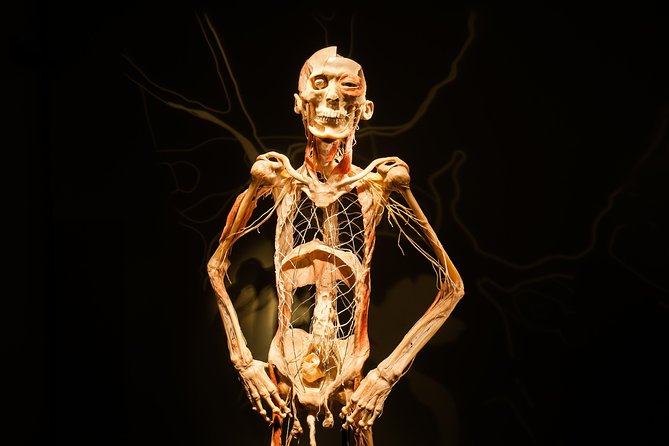
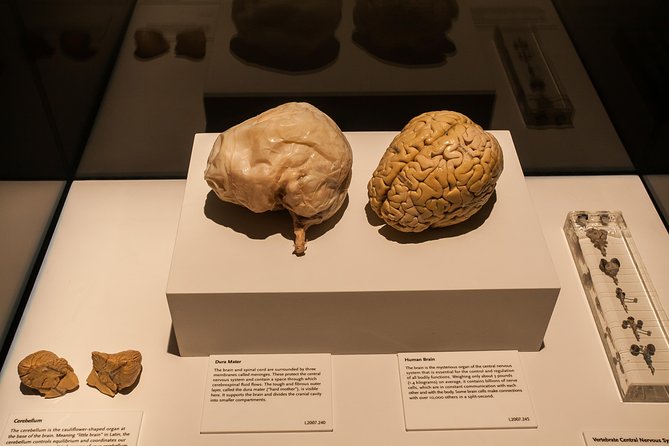
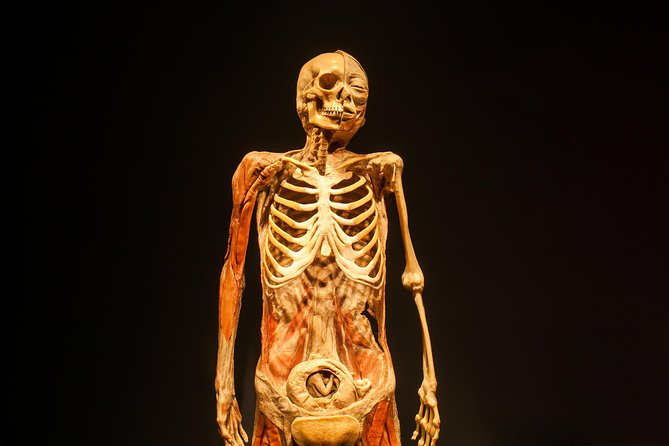
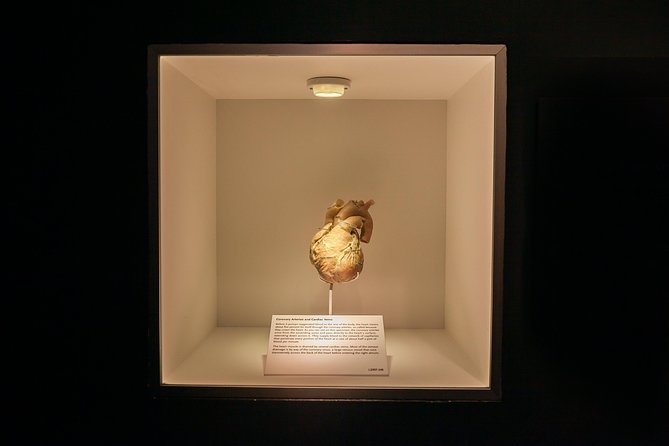
The most striking part of Bodies The Exhibition is simple: you are looking at real human bodies and organs, not plastic models. At Luxor, 13 full-body specimens and more than 260 organs show the circulatory, respiratory, digestive, endocrine, and nervous systems in remarkable detail.
I like the self-guided format, since you can stop at a diseased lung or sliced body as long as you wish. I also like that the exhibit turns anatomy into a practical lesson about health, rather than merely presenting shocking displays. The main drawback is clear: some specimens are graphic, and the roughly 45-to-60-minute visit may feel short for the $37.13 ticket.
In This Review
- Key points
- What You Actually See Inside the Luxor Exhibit
- Polymer Preservation, Without the Medical Jargon
- The Disease Displays Make the Lesson Personal
- The Most Sensitive Room Requires a Personal Choice
- Why the Self-Guided Format Works
- Finding Bodies Inside Luxor
- The $37.13 Price: Fair for the Right Kind of Visitor
- Respect, Origins, and What the Exhibit Does Not Tell You
- Practical Tips Before You Go
- Who Will Get the Most From This Experience?
- Should You Book Bodies The Exhibition?
- FAQ
- What are the opening hours for Bodies The Exhibition?
- How long does a visit to Bodies The Exhibition take?
- Where is Bodies The Exhibition located?
- Do I need to exchange my ticket at the entrance?
- Is Bodies The Exhibition guided?
- Is the exhibition suitable for children?
- Are photographs allowed inside the exhibition?
- Is Bodies The Exhibition wheelchair accessible?
- Is parking included with admission?
- Can I cancel my ticket for a refund?
Key points
- Real anatomy, carefully preserved: See full bodies, organs, and disease specimens treated with silicone rubber through polymer preservation.
- A self-guided Luxor attraction: Enter with your barcode and move through the galleries at your own speed.
- Strong educational value: Explanations cover how body systems work and how illness changes organs.
- A useful hot-weather plan: The indoor exhibit works well when Las Vegas is too hot or rainy for outdoor sightseeing.
- Know the sensitivity level: Real dissected bodies, full genitalia, and preserved fetuses are included, with parental guidance advised.
What You Actually See Inside the Luxor Exhibit
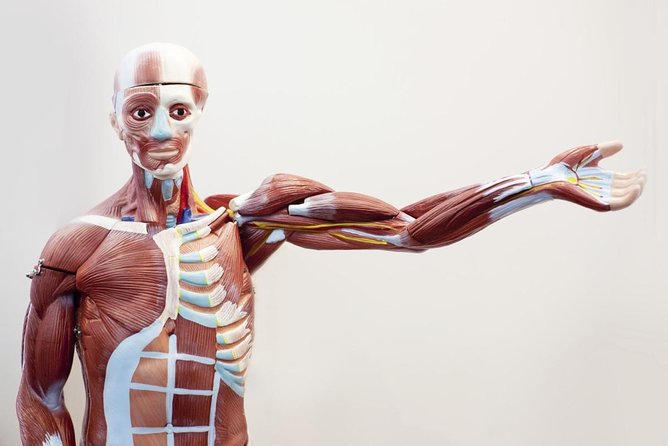
This is not a conventional museum of medical instruments. The central displays are actual human specimens, dissected and arranged to show how the body fits together.
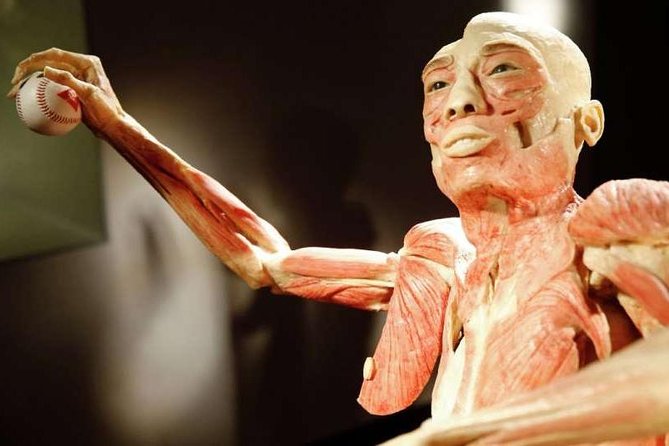
You see full-body forms posed to reveal muscles, bones, vessels, and internal structures. Other displays isolate organs or present thinly sliced sections. The effect is more instructive than frightening when you take time to read the labels, but the subject matter remains unmistakably real.
The exhibition contains 13 whole-body specimens and more than 260 organs and partial specimens. That gives you several ways to understand anatomy. A full body shows the relationship between systems, while an individual organ lets you study disease or structure more closely.
The galleries are arranged by body system. You can learn how blood moves through the circulatory system, how the lungs handle breathing, how the digestive organs process food, and how endocrine organs influence the body. The information panels and video clips add needed context, especially if your biology classes are a distant memory.
You do not need medical training to follow the exhibit. Still, I found the displays most rewarding when I slowed down and connected the labels to what was in front of me. If you hurry past everything, it can feel like a room of unusual objects. If you read the explanations, it becomes a compact anatomy lesson.
More casino shows and attractions:
- Lower Antelope Canyon and Horseshoe Bend Day Tour with Lunch
★ 5.0 · 6,764 reviews - David Copperfield at the MGM Grand Hotel and Casino
★ 4.0 · 4,382 reviews - Las Vegas Strip: The High Roller at The LINQ Ticket
★ 4.6 · 4,266 reviews
Polymer Preservation, Without the Medical Jargon
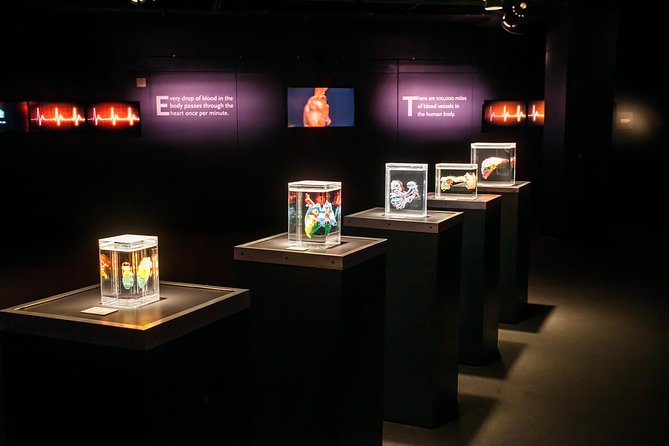
The bodies are preserved through a method called polymer preservation. In plain terms, water and tissue in the body are replaced with liquid silicone rubber, which prevents the normal decay process.
The treatment can take up to a year, depending on the size of the body or organ. The result is a specimen that can be displayed permanently and handled as a stable teaching object, though the exhibit itself is for viewing rather than touching.
This process matters because it allows you to see anatomy in a way that a standard skeleton model cannot show. Muscles, vessels, organs, and their connections remain visible. A diagram tells you how the body is supposed to work. These specimens show its physical arrangement.
The presentation is deliberately orderly. Sections focus on different systems, so you are not left to guess what you are seeing. Staff members are available for questions, which is useful when a label raises a question that a textbook-style panel does not answer.
The Disease Displays Make the Lesson Personal
The healthiest-looking specimens explain structure. The disease displays explain consequences.
You might see organs affected by serious illness, including examples of cancer and smoker’s lungs. These are not abstract warnings. Seeing how disease alters the shape and condition of an organ can make familiar health advice feel less distant.
This section may be the most valuable part for adults who already know basic anatomy. It connects habits and medical conditions to physical results. The display does not replace medical advice, of course, but it gives you a direct visual sense of what disease can do.
I would allow extra time here if you have an interest in medicine, nursing, forensic studies, or health science. Students have a reason to look closely at the labels, and people with no medical background can still understand the broad point.
The exhibit can also be sobering. You may leave thinking more carefully about smoking, diet, exercise, or routine health care. That is a useful outcome for a museum visit, though it also means this is not a light, silly Las Vegas attraction.
The Most Sensitive Room Requires a Personal Choice
A private room contains preserved fetuses at different stages of development. You can choose whether to enter.
I appreciate that this is not forced into the main route. It gives you control over how much of the exhibit you want to see and makes the experience more manageable for families with different comfort levels.
Parents should make that decision before entering with children. The exhibit is recommended for ages four and older, while all ages are welcome, but parental guidance is specifically appropriate because the displays include real human bodies, full genitalia, and model eyeballs.
Children three and under enter free with paid adult admission. That does not necessarily mean the material is right for every young child. A curious older child may find the exhibit fascinating, while another may find the full-body specimens upsetting. I would explain in advance that the displays are real and that you can leave any section without missing the rest.
More Las Vegas museums and exhibits:
- Ticket for ARTE Museum Las Vegas
★ 5.0 · 2,106 reviews - Las Vegas Mob Museum Admission Ticket
★ 4.5 · 1,295 reviews - Madame Tussauds Wax Museum Las Vegas
★ 4.4 · 601 reviews - Titanic: The Artifact Exhibition at the Luxor Hotel and Casino
★ 4.5 · 350 reviews
Why the Self-Guided Format Works
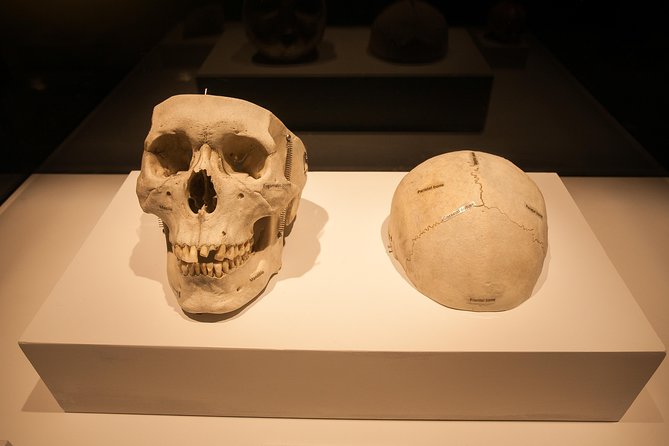
Your ticket gives you admission rather than a scheduled group tour. The exhibition is self-guided, and optional audio guides are available for an added fee.
That format suits this subject. You may want to spend five minutes studying a single organ, while someone with you may be ready to move on. You are free to read every panel, skip a section, or revisit a display.
The average visit lasts 45 to 60 minutes, though you can stay longer during opening hours. The tour summary lists a duration of about 10 hours, but that reflects the flexibility of the admission rather than 10 hours inside the galleries. The practical plan is to budget about an hour, with more time if you read closely.
I would not treat this as a quick photo stop. The labels and diagrams provide much of the value, so your pace should depend on how much you want to learn. Medical students, nurses, and people interested in anatomy may want longer. Someone simply curious about the human body may be satisfied in under an hour.
Finding Bodies Inside Luxor
The exhibit is located at the Luxor Hotel and Casino. From the parking garage, cross the walkway, enter the hotel, and take the escalators up to the Food Court. Walk through the Food Court, and the exhibition is on the left.
This is a straightforward indoor stop once you are inside the resort, though Luxor is large enough that you should allow a few minutes to find the correct route. The attraction is near public transportation, so you do not need a hotel pickup or drop-off arrangement.
The stated start time is 11 a.m., and the exhibition is open daily from 11 a.m. to 6 p.m., with last admission at 5 p.m. Hours can change, so check them before setting out. Since the ticket can be used at any time during opening hours, you have room to fit it between other Las Vegas plans.
That flexibility is especially handy in summer. Bodies is a good indoor choice when the heat makes walking the Strip unpleasant, and it also works on a rainy day. You can pair it with other Luxor activities, though the exhibit itself is a focused stop rather than an all-day attraction.
The $37.13 Price: Fair for the Right Kind of Visitor
Admission is $37.13 per person, including taxes and fees. Parking and valet charges are extra, and no hotel transportation is included.
At first glance, that is a lot for a visit that often takes about an hour. I would not recommend it as a casual purchase for everyone in your group, especially if one person dislikes anatomy displays or has little interest in science.
For the right visitor, the value is better. This is a rare chance to see preserved human anatomy at close range, with explanations organized around the way the body works. Students, health professionals, parents teaching older children, and anyone fascinated by medicine can get more from it than from a generic indoor attraction.
The price also buys flexibility. You are not locked into a short entry window, and you can arrive during operating hours with the barcode on your ticket. Just remember that parking is a separate cost, and the exhibition does not include food, drinks, or transportation.
My practical advice is to book it when the subject itself interests you. Do not book merely because it is indoors or because someone else has put it on a Las Vegas checklist. The exhibit is educational and unusual, but it is not universally entertaining.
Respect, Origins, and What the Exhibit Does Not Tell You
The specimens are provided by Dalian Hoffen Bio-Technique Co. Ltd. in China. The stated information identifies them as unclaimed bodies that were legally donated and whose former owners died of natural causes.
That background is worth knowing before you visit. You are looking at human remains, and many people find it helpful to approach the galleries with respect rather than treating them as a sideshow.
The display gives you a view of human anatomy traditionally available mainly to medical professionals. It also shows how similar human bodies are across different backgrounds, while allowing you to notice differences in size and form.
One limitation is that the exhibit does not necessarily provide every personal detail you might want about each specimen. If you hoped to compare the age or sex of each body, that information may not be available on display. For some people, that reduces the personal connection. For others, the focus on anatomy is exactly the point.
Practical Tips Before You Go
Book ahead if visiting at a popular time. Confirmation is sent within 48 hours, subject to availability, and the experience is booked about 15 days in advance on average.
Your ticket includes a barcode that can be scanned at the entrance. You do not need to exchange it for another ticket. If you book on the same day, the ticket cannot be picked up less than two hours after placing the order, so last-minute plans require care.
Food and drinks are not allowed inside. The attraction is wheelchair accessible, and most people can participate.
Photography information is inconsistent in the supplied details. One section says photos and videos are prohibited, while the FAQ says non-commercial photos are allowed and professional equipment requires prior approval. To avoid a wasted argument at the door, plan to put your phone away unless staff clearly confirm that personal photography is permitted that day.
Cancellation is free up to 24 hours before the start time for a full refund. Inside that 24-hour window, cancellations and changes are not accepted for a refund.
Who Will Get the Most From This Experience?
I would recommend Bodies to you if you have a genuine interest in how the body is built and how illness changes it. Nursing students, medical students, forensic science students, health professionals, and curious teenagers have plenty to study.
It can also work well for a family with older children. The exhibit gives parents a concrete way to discuss organs, health, and the body, but you should decide first if your children are comfortable with real human remains.
You may want to skip it if you dislike graphic material, prefer interactive entertainment, or want a large museum that takes several hours. Some people find the exhibition fascinating from the first room. Others find it too clinical or too limited, especially if they have seen a larger version elsewhere.
That variation is normal for this kind of attraction. The exhibit depends heavily on your interest and willingness to read. The specimens are the draw, but the text is what turns them into a meaningful experience.
Should You Book Bodies The Exhibition?
Book it if you want a thoughtful indoor Las Vegas stop and the human body genuinely interests you. The preserved full-body specimens, disease examples, and clear system-by-system layout offer far more than a quick display of dissected remains.
I would be more cautious if you are booking for a mixed group. One person may want to study every organ, while another may be ready to leave after the first gallery. The private fetal display and full genitalia also make parental guidance important.
At $37.13, it is not the cheapest one-hour activity in town. But for a student, health professional, curious family, or anatomy enthusiast, it can be a memorable and useful hour. If that sounds like you, reserve your admission, arrive after 11 a.m., and give yourself enough time to read instead of rushing through.
FAQ
What are the opening hours for Bodies The Exhibition?
The exhibition is open daily from 11 a.m. to 6 p.m., with last admission at 5 p.m. Hours are subject to change.
How long does a visit to Bodies The Exhibition take?
The average visit takes 45 to 60 minutes. You may stay longer and explore the galleries at your own pace during opening hours.
Where is Bodies The Exhibition located?
It is inside the Luxor Hotel and Casino in Las Vegas. From the parking garage, cross the walkway, enter the hotel, take the escalators to the Food Court, and walk through it. The exhibition is on the left.
Do I need to exchange my ticket at the entrance?
No. Your ticket includes a barcode that can be scanned at the entrance.
Is Bodies The Exhibition guided?
No. It is a self-guided experience. Optional audio guides are available for a nominal fee.
Is the exhibition suitable for children?
Children are welcome, and the recommended age is four and older. Children three and under enter free with paid adult admission. Parental guidance is suggested because the displays include real preserved human bodies, full genitalia, and model eyeballs.
Are photographs allowed inside the exhibition?
The provided information differs. One set of details says photos and videos are prohibited, while another says non-commercial photos are allowed and professional photography requires prior approval. Check the current rule at the entrance.
Is Bodies The Exhibition wheelchair accessible?
Yes. The exhibition is fully wheelchair accessible, and most people can participate.
Is parking included with admission?
No. Self-parking and valet parking are available at Luxor, but parking fees are not included. Hotel pickup and drop-off are also not included.
Can I cancel my ticket for a refund?
Yes. You can cancel at least 24 hours before the experience start time for a full refund. Cancellations or changes made within 24 hours are not accepted for a refund.
New on the Las Vegas list
- Latin Nightclub Tour by Party Bus w/ Fast-Pass Entry★ 3.5 · 3 reviews
- Death Valley an Mojave Desert VIP Small Group Tour Las Vegas★ 4.5 · 3 reviews
- Las Vegas Mexican Salsa Cooking Experience with Celebrity Chef★ 5.0 · 3 reviews
- UTV Valley Of Fire Exploration Full Day Tour★ 5.0 · 3 reviews
- Las Vegas: Guided Off-Road UTV Driving Adventure★ 5.0 · 3 reviews
- Combo Tour: Valley of Fire & Hoover Dam Full-Day Tour★ 5.0 · 3 reviews
- Grand Canyon West, Hoover Dam Photo Stop and Optional Skywalk★ 5.0 · 3 reviews
- Los Angeles, Hollywood, Santa Monica Tour from Las Vegas★ 3.5 · 3 reviews
Museums, compared.



Titanic: The Artifact Exhibition at the Luxor Hotel and Casino
Read our review →

Paradox Museum in Las Vegas: Exit Reality, Enter Fun Illusions
Read our review →

Browse the lists this tour appears in