
Reviewed · MUSEUMS
Atomic Museum Admission Ticket
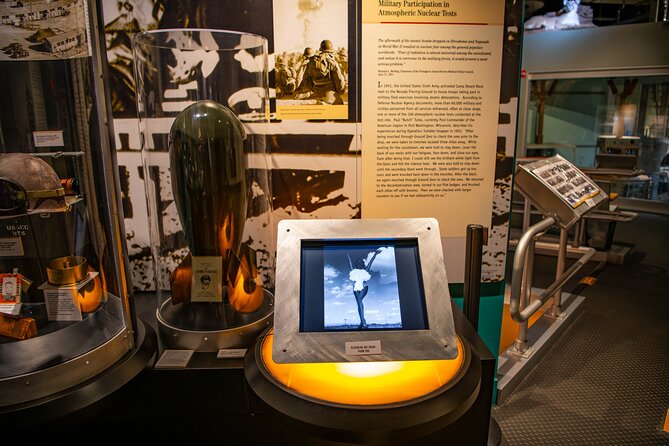
The Atomic Museum takes you far beyond the familiar mushroom cloud. Inside, you’ll trace the story from wartime bomb development to Nevada’s testing program, then see how nuclear science shaped politics, popular culture, secrecy, and daily life. I like the wide historical scope and the chance to examine artifacts and photographs that are hard to encounter elsewhere.
I also like the freedom to move at your own speed. You can make a quick one-hour visit, or stay closer to two hours if you read the displays carefully. A floor guide or volunteer docent may add useful context, though the museum can feel text-heavy and dated if you prefer fast, high-tech attractions.
In This Review
- Key points to know before you go
- Why the Atomic Museum matters in Las Vegas
- Start with the Manhattan Project and wartime science
- Nevada testing and the machinery of secrecy
- Rocket engines, science, and the technical side
- Atomic-age pop culture gives the museum a lighter turn
- A self-guided visit with room for extra explanation
- Is $29 a good Las Vegas museum price?
- Location and timing for a Strip break
- Who will enjoy this museum most?
- Practical ways to get more from your visit
- Should you book the Atomic Museum?
- FAQ
- How much does admission to the Atomic Museum cost?
- How long does a visit take?
- What are the museum’s opening hours?
- Is the experience self-guided?
- Is a mobile ticket provided?
- What subjects does the museum cover?
- Is the museum near public transportation?
- Are service animals allowed?
- Can most people participate?
- Can I cancel or change my ticket?
Key points to know before you go
- Atomic testing in context: Follow the United States nuclear program from the Manhattan Project through Nevada test-site history.
- More than bombs: Expect exhibits on science, rocket engines, cryptography, politics, secrecy, and atomic-age pop culture.
- Flexible visit length: Plan on 1 to 2 hours, depending on how closely you read the panels.
- Self-guided format: Browse independently, with the option of added help from floor staff or an audio tour.
- Good value at $29: The advance price is notably lower than the reported on-site admission price.
- Near the Strip, but not a casino stop: This gives you a serious historical break from Las Vegas entertainment.
Why the Atomic Museum matters in Las Vegas
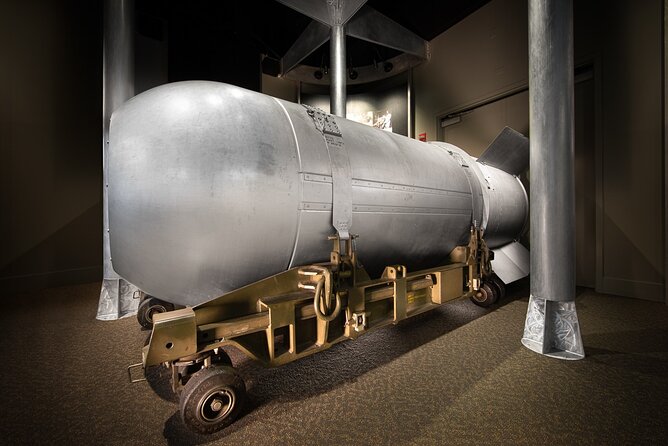
Las Vegas is often sold as neon, gambling, and late nights. Yet the city also sits close to one of the most important places in United States nuclear history. The Nevada Test Site became a major location for atomic weapons testing, and its story is tied closely to the development of modern American power.
The Atomic Museum gives that story a public home. Its mission is to preserve the history connected with the Nevada Test Site and the nation’s nuclear weapons program, while encouraging education and discussion about the effects of atomic testing.
That purpose matters because this is not just a collection of military objects. The museum asks you to think about scientific progress, political decisions, national security, public fear, and the human cost of testing. You are not simply looking at old equipment. You are seeing how one technology changed government policy, popular culture, and the way people understood danger.
Congress designated the museum as a private national museum in December 2012. That status reflects its role in preserving and explaining the country’s nuclear testing program. You do not need a technical background to follow the exhibits, but you will get more from the visit if you take time with the captions.
More Las Vegas museums and exhibits:
- Ticket for ARTE Museum Las Vegas
★ 5.0 · 2,106 reviews - Las Vegas Mob Museum Admission Ticket
★ 4.5 · 1,295 reviews - Madame Tussauds Wax Museum Las Vegas
★ 4.4 · 601 reviews
Start with the Manhattan Project and wartime science
One of the museum’s strongest sections covers the United States effort to develop an atomic bomb during World War II. This part gives you the basic scientific and political background needed for the rest of the visit.
The Manhattan Project was not only a story of laboratories and engineers. It also involved secrecy, military planning, industrial production, and a race against time. The museum connects those pieces so you can see how scientific theory became a weapon with global consequences.
Expect photographs, historical displays, and explanations of the people and institutions involved. The material can be dense, so I suggest reading the main panels first and then choosing the objects that interest you most. If you try to absorb every label at the same pace, your attention may fade before reaching the later galleries.
The museum also uses film presentations and historical imagery to provide context. These elements help break up the reading and give the period a stronger human scale. The subject is serious, but the presentation is designed for a general audience rather than a specialist.
Nevada testing and the machinery of secrecy
The Nevada Test Site section shifts the focus from wartime development to the decades of testing that followed. Here, you begin to see how nuclear weapons became part of government planning, military strategy, and public life.
This section is especially useful if your knowledge comes mostly from the famous photographs of mushroom clouds. The museum explains the testing program as an ongoing national project, not a single event. You get a better sense of the planning, scientific work, observation, and secrecy required to conduct tests.
I found the cryptography section particularly appealing because it shows the less obvious side of the era. Nuclear weapons depended on information control as much as on physics. Codes, restricted data, and tightly controlled communication helped shape the culture of secrecy around the program.
Some exhibits may feel old-fashioned in design. One visitor found the museum dull and outdated, and that is a fair warning for anyone expecting interactive displays at every turn. The subject matter is strong, but much of the work is done by photographs, objects, film, and written explanation.
Rocket engines, science, and the technical side
The museum does not limit itself to bomb development. You may also encounter displays about rocket engines and the science behind atomic testing.
These sections give the visit a wider technical frame. They show how nuclear research sat within a larger world of aerospace engineering, military technology, and scientific experimentation. If you enjoy machines and engineering, allow extra time here.
The technical material is presented alongside political and historical information. That mix is important. The museum does not treat science as something separate from public decisions. It shows how research affected military policy, and how political goals influenced scientific work.
You will not need to understand advanced physics to enjoy this section. Still, the experience rewards patience. Read the introductory panels before studying the objects, because the labels make more sense once you understand the problem each machine or device was meant to solve.
A few more Las Vegas days worth comparing
- Las Vegas Strip: The High Roller at The LINQ Ticket
★ 4.6 · 4,266 reviews - High Roller Wheel Admission Ticket at The LINQ
★ 4.5 · 3,379 reviews - Las Vegas: STRAT Tower Observation Deck Ticket
★ 4.5 · 1,469 reviews - Las Vegas: High Roller Entry Ticket with In-Cabin Open Bar
★ 4.6 · 1,278 reviews
Atomic-age pop culture gives the museum a lighter turn
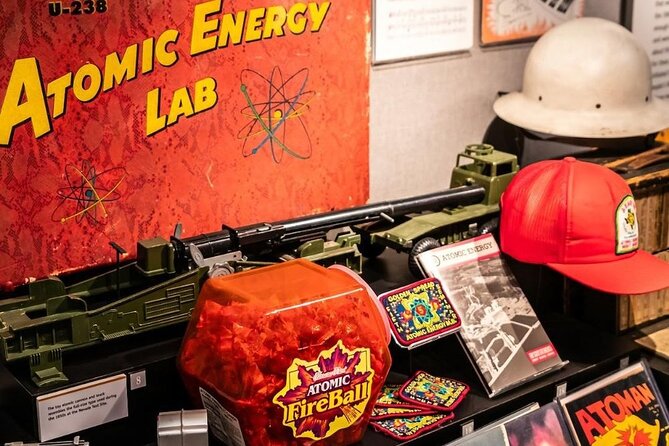
The museum also examines the way atomic fear and fascination entered American popular culture. This is where you see the period through advertising, entertainment, public imagery, and other pieces of atomic-age culture.
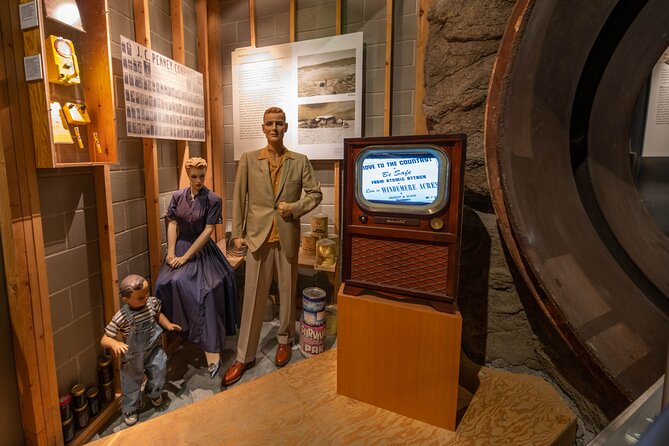
This material gives the visit some variety. After several galleries focused on weapons, testing, and government secrecy, pop culture shows how ordinary people encountered atomic ideas outside official channels. Nuclear science could seem frightening, exciting, modern, or even fashionable, depending on the setting.
I like this section because it helps explain why atomic imagery became so recognizable. The mushroom cloud was not only a military symbol. It appeared in films, products, jokes, warnings, and public conversation. The museum uses these objects to show how a complicated political issue entered daily life.
The tone can feel strange at times. The subject is destructive, yet some of the pop culture material is playful. That contrast is part of the point, but it may also leave you thinking about how quickly serious danger can become entertainment.
A self-guided visit with room for extra explanation
Your $29 admission is for the museum itself, and the main experience is self-guided. You decide how quickly to move, which labels to read, and how long to spend with each gallery.
That freedom works well for mixed-interest groups. A history enthusiast can linger over documents and photographs while a less committed companion moves ahead. You can also return to sections you passed too quickly the first time.
The museum may have floor staff available to answer questions and add context. A volunteer docent who is a retired expert has helped make the experience more personal for some visitors. No individual guide is named in the information provided, so you should not expect a specific person to lead your visit.
Headphones are another consideration. An audio tour is available for an additional charge, and one visitor specifically wished they had rented the headphones. If you prefer spoken explanation to long wall panels, the extra cost may be worthwhile.
I would allow at least 90 minutes if this is your first visit. You can see the major sections in about an hour, but that pace leaves little time for careful reading. Two hours gives you room for the film presentation, technical displays, cryptography, and pop culture galleries without rushing.
Is $29 a good Las Vegas museum price?
At $29 per person, this is a fair admission price for a specialized museum, especially if you have a clear interest in American history, science, or the Cold War era.
The value comes from the subject matter and the amount of material packed into a relatively short visit. You are not paying for an all-day attraction. You are paying for a focused museum that can fill part of an afternoon and add a very different layer to a Las Vegas trip.
Price comparison matters here. One recent account reported paying $29 in advance, while on-site admission was said to be $50, or $75 with guided touring. Treat those door prices as subject to change, but the lesson is clear: pre-paying can be a smart choice.
The ticket is a mobile ticket, which keeps arrival simple. Confirmation is provided when you book. Since the experience is non-refundable and cannot be changed, check your schedule before paying. This is not the right ticket to buy casually if your plans are uncertain.
Location and timing for a Strip break
The museum is in Las Vegas and offers a useful change of pace from the Strip. It is near public transportation, so you do not necessarily need a car or taxi for the visit.
Opening hours are 9:00 a.m. to 5:00 p.m. daily for the stated operating period. A morning visit may work well if you want a quieter start, while an afternoon stop can fill time before dinner or evening entertainment.
Because the museum takes about 1 to 2 hours, it fits neatly beside another Las Vegas activity. I would not plan it as your only major stop for the day unless you are deeply interested in the subject. Instead, use it as a focused cultural outing between larger attractions.
The museum is also close enough to the main casino area to make the contrast useful. After hours of commercial entertainment, the quiet seriousness of nuclear history can reset your attention. Las Vegas has more than one story to tell, and this is one of the more unexpected ones.
Who will enjoy this museum most?
I recommend the Atomic Museum most strongly to people who enjoy:
- American military and political history
- The Manhattan Project and nuclear science
- Cold War culture and government secrecy
- Engineering, rockets, and technical displays
- Museums that reward reading and reflection
- Oppenheimer-era history and its wider consequences
It is also a good choice for couples with different sightseeing tastes. One person can focus on the historical material while the other spends more time with machines, photographs, or pop culture objects.
You may be less impressed if you want a highly interactive attraction, a short photo stop, or a polished entertainment show. The museum has a serious educational purpose, and some sections depend heavily on written panels. Its presentation will appeal more to patient readers than to visitors seeking constant motion.
Families can participate, since most people can take part and service animals are allowed. Still, the subject involves weapons, destruction, and political conflict. Parents should decide if that tone fits their children.
Practical ways to get more from your visit
Start by scanning the whole museum before reading every label. This lets you understand the layout and choose where to spend your limited time.
If you have only one hour, prioritize the Manhattan Project, Nevada testing, cryptography, and the film presentation. Then use the remaining minutes for the rocket and pop culture displays.
If you have closer to two hours, slow down. Read the captions beside the photographs, look for links between the technical displays and the political material, and give yourself time to consider how atomic testing affected public culture.
Ask floor staff questions when available. A short explanation from someone familiar with the subject can help connect several displays that may otherwise feel separate.
Consider the audio option if you learn better by listening. The museum is self-guided, and headphones may provide a more structured route through the material.
Most important, do not treat this as a quick collection of bomb memorabilia. The visit works best when you think about the full chain: scientific discovery, wartime urgency, weapons development, testing, secrecy, public fear, and popular culture.
Should you book the Atomic Museum?
Book it if you want a thoughtful break from casinos and a clear introduction to America’s nuclear testing era. The $29 advance price is attractive, the mobile ticket is convenient, and the 1 to 2 hour format fits easily into a Las Vegas day.
I would skip it if you dislike museums with substantial reading or expect a cutting-edge interactive attraction. The design may feel dated in places, and the subject can be heavy.
For history fans, science enthusiasts, and anyone interested in the world surrounding the Manhattan Project, this is one of Las Vegas’s most worthwhile off-Strip stops. Go with enough time to read, consider the audio option, and keep your expectations focused on education rather than spectacle.
FAQ
How much does admission to the Atomic Museum cost?
The listed advance price is $29 per person.
How long does a visit take?
You should plan for approximately 1 to 2 hours.
What are the museum’s opening hours?
The museum is open Monday through Sunday from 9:00 a.m. to 5:00 p.m. during the stated operating period.
Is the experience self-guided?
Yes. You can explore the museum at your own pace. An audio tour is also available for an additional charge.
Is a mobile ticket provided?
Yes. The admission includes a mobile ticket, and confirmation is provided when you book.
What subjects does the museum cover?
The museum covers the Manhattan Project, nuclear weapons development, Nevada testing, rocket engines, cryptography, science, politics, secrecy, and atomic-age pop culture.
Is the museum near public transportation?
Yes. The museum is near public transportation.
Are service animals allowed?
Yes. Service animals are allowed.
Can most people participate?
Yes. The experience states that most people can participate.
Can I cancel or change my ticket?
No. This experience is non-refundable and cannot be changed for any reason.
New on the Las Vegas list
- Latin Nightclub Tour by Party Bus w/ Fast-Pass Entry★ 3.5 · 3 reviews
- Death Valley an Mojave Desert VIP Small Group Tour Las Vegas★ 4.5 · 3 reviews
- Las Vegas: Guided Off-Road UTV Driving Adventure★ 5.0 · 3 reviews
- Las Vegas Mexican Salsa Cooking Experience with Celebrity Chef★ 5.0 · 3 reviews
- UTV Valley Of Fire Exploration Full Day Tour★ 5.0 · 3 reviews
- Grand Canyon West, Hoover Dam Photo Stop and Optional Skywalk★ 5.0 · 3 reviews
- Los Angeles, Hollywood, Santa Monica Tour from Las Vegas★ 3.5 · 3 reviews
- Combo Tour: Valley of Fire & Hoover Dam Full-Day Tour★ 5.0 · 3 reviews
Museums, compared.



Titanic: The Artifact Exhibition at the Luxor Hotel and Casino
Read our review →

Paradox Museum in Las Vegas: Exit Reality, Enter Fun Illusions
Read our review →
Browse the lists this tour appears in