
Reviewed · CASINO SHOWS & ATTRACTIONS
Las Vegas: Discovering King Tut’s Tomb Exhibit at the Luxor
King Tutankhamun’s tomb comes to life at the Luxor through a carefully rebuilt exhibit that lets you follow Howard Carter’s famous 1922 discovery. You move from ancient Egyptian beliefs and daily culture into a three-dimensional recreation of the tomb as Carter found it, with replicas of the statues, art, and burial treasures.
I like the clear two-part design, which gives the story a useful beginning before showing you the tomb itself. I also like that expert Egyptian craftsmen made the replicas with advice from Egyptologists, so you can examine the treasures without handling fragile originals. The main drawback is the $40 admission, which may feel high if you want a quick attraction rather than a serious history stop.
In This Review
- Key points to know before you go
- Entering King Tut’s story at the Luxor
- The first section explains ancient Egypt before Tut
- Following Howard Carter’s 1922 search
- The three-dimensional tomb recreation
- Why the replicas matter
- How much does the $40 ticket buy you?
- The best time and pace for your visit
- Who will enjoy this most?
- How it compares with other Luxor attractions
- Practical advice for making the most of it
- Should you book Discovering King Tut’s Tomb?
- FAQ
- Where is Discovering King Tut’s Tomb located?
- How much does admission cost?
- Is this a live guided tour?
- What does the exhibit include?
- What will I see inside?
- What are the opening hours?
- Is the exhibit wheelchair accessible?
- Can children attend?
Key points to know before you go
- A recreation of Carter’s discovery: Follow the story of Howard Carter and the 1922 opening of Tutankhamun’s tomb.
- Two connected sections: Start with ancient Egyptian culture and beliefs, then move into the excavation and burial site.
- Replica treasures: See painstaking copies of the statues, art, and objects found inside the tomb.
- A three-dimensional tomb scene: Enter a recreation of the site as it appeared at the moment of discovery.
- Simple Las Vegas planning: The exhibit is open daily from 10:00 am to 8:00 pm, with last admission at 7:00 pm.
- Good for mixed-age groups: Children age 3 and under enter free, and guests under 18 must attend with an adult.
Entering King Tut’s story at the Luxor
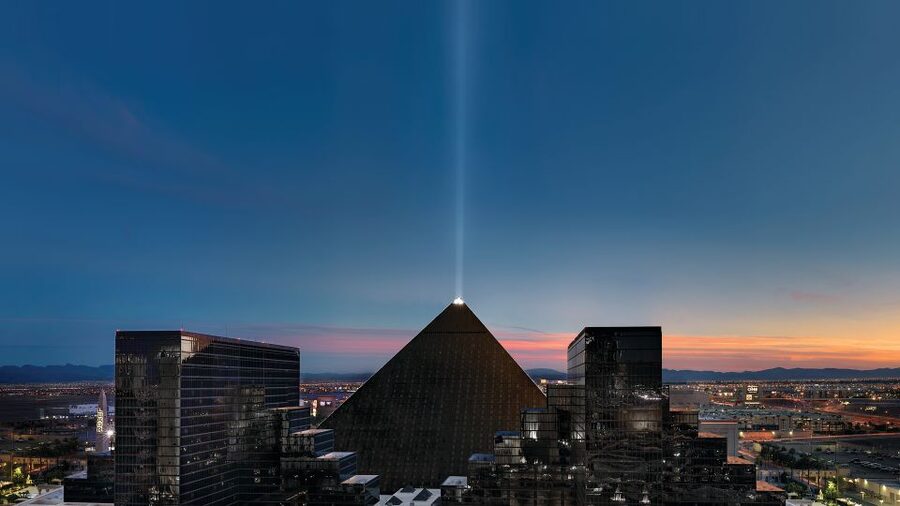
The Luxor is an appropriate setting for this attraction. The hotel’s Egyptian theme gives you the right frame of mind before you even reach the exhibit, though the real value begins inside, where the display turns a famous name into a clear story.
Tutankhamun was a young pharaoh, but his fame comes less from the length of his reign than from the condition of his tomb. The 1922 discovery gave the modern world an unusually close look at royal burial customs, Egyptian art, and the belief that life continued after death.
You are not simply shown a collection of objects. The experience explains why those objects mattered. That distinction is important. A room full of golden-looking replicas can be pleasant to see, but the background about Egyptian beliefs gives the display purpose.
The exhibit uses media and objects to recreate the burial site. That combination should appeal to you if you like museums but prefer a story with movement and atmosphere rather than rows of objects with long labels.
More casino shows and attractions:
- Lower Antelope Canyon and Horseshoe Bend Day Tour with Lunch
★ 5.0 · 6,764 reviews - David Copperfield at the MGM Grand Hotel and Casino
★ 4.0 · 4,382 reviews - Las Vegas Strip: The High Roller at The LINQ Ticket
★ 4.6 · 4,266 reviews
The first section explains ancient Egypt before Tut
The first part takes you back thousands of years, to the world in which Tutankhamun lived. It provides context about ancient Egyptian culture, the role of the pharaoh, and the belief in an afterlife.
This opening section matters because the tomb makes little sense without it. The objects were not placed there as decoration. They formed part of a carefully planned burial system intended to support the king after death.
You learn to look at the tomb treasures as more than impressive art. Statues, images, and burial goods reflect ideas about power, protection, identity, and the next life. The exhibit connects these ideas to the people who made and used the objects.
I would give this first section your full attention instead of rushing straight toward the famous tomb recreation. The material helps you understand why the burial chamber was packed with objects and why the discovery caused such excitement.
The exact amount of time you spend here depends on your pace. No fixed visit length is provided, so plan around your own interest. If you read every explanation, the exhibit should take longer than a quick look at the main replicas.
Following Howard Carter’s 1922 search
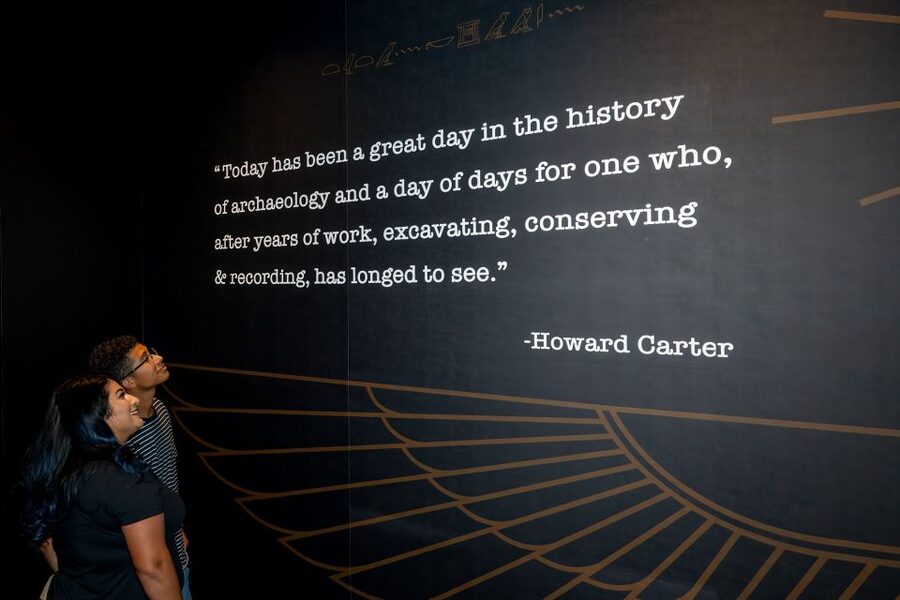
The second part shifts from ancient Egypt to modern archaeology. You follow Howard Carter as he worked to locate and uncover Tutankhamun’s lost tomb.
This change in time period gives the visit a stronger human story. Instead of seeing only the end result, you get a sense of the difficulty involved in finding the site and exposing it without damaging what remained inside.
Carter’s discovery has become one of archaeology’s most famous moments because the tomb offered a rare look at a royal burial site. The exhibit places you near that moment through a recreation of the excavation area, the tomb, and its contents.
You should not expect a live guide or a traditional walking tour. The supplied information describes a virtual and exhibit-based presentation, not a tour led by a named guide. That makes the experience easy to fit into a day at the Luxor, but it also means you need to set your own pace and read the material carefully.
The three-dimensional tomb recreation
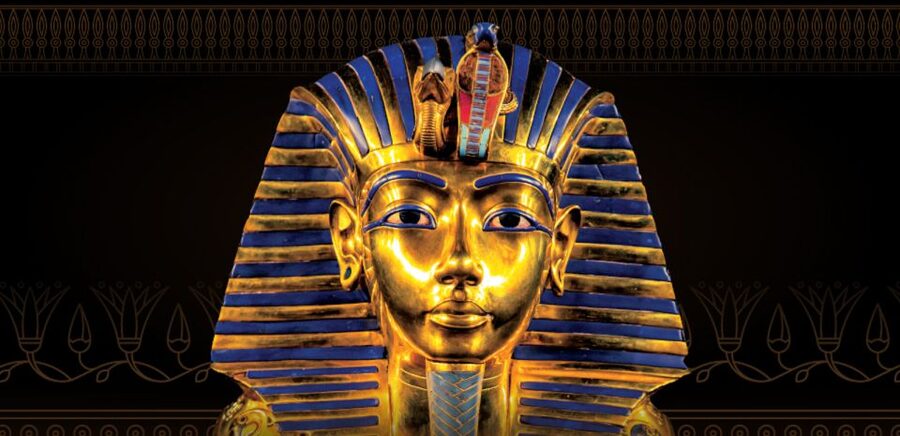
The highlight is the full three-dimensional recreation of the excavation site and tomb. The goal is to show the setting as it appeared when Carter discovered it, before the treasures were removed and separated for study.
That approach gives the objects context. A statue viewed alone can be striking, but a statue placed within the crowded burial setting tells you more about the original arrangement and the scale of the discovery.
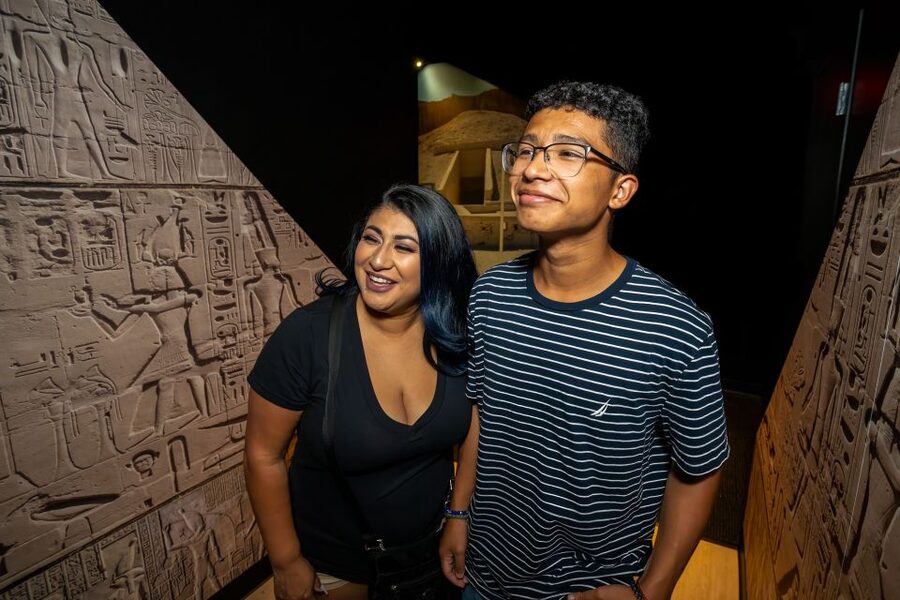
The display aims for an accurate reconstruction down to small details. You get a chance to step inside a scene that, at the time of its discovery, had been seen by Carter and only a small number of other people.
This is the part most likely to satisfy visitors who come for the visual impact of King Tut. The statues and artifacts are the main draw, and the careful copies allow you to look closely without the restrictions that often surround priceless museum pieces.
Still, keep your expectations in check. These are replicas, not the original treasures. The exhibit is valuable because of its setting, craftsmanship, and explanation, but it cannot offer the same authenticity as viewing Tutankhamun’s original objects in a major museum.
A different speed of Las Vegas day:
- Grand Canyon West, Hoover Dam Stop and Optional Lunch and Skywalk
★ 5.0 · 19,535 reviews - Grand Canyon West, Hoover Dam Stop, Breakfast, Lunch & Skywalk
★ 5.0 · 12,194 reviews - Half-Day Mojave Desert ATV Tour from Las Vegas
★ 5.0 · 7,350 reviews - Grand Canyon West Bus Tour with Hoover Dam and Optional Skywalk
★ 4.0 · 7,224 reviews
Why the replicas matter
The replicas are not a minor detail. They are central to the design of the experience.
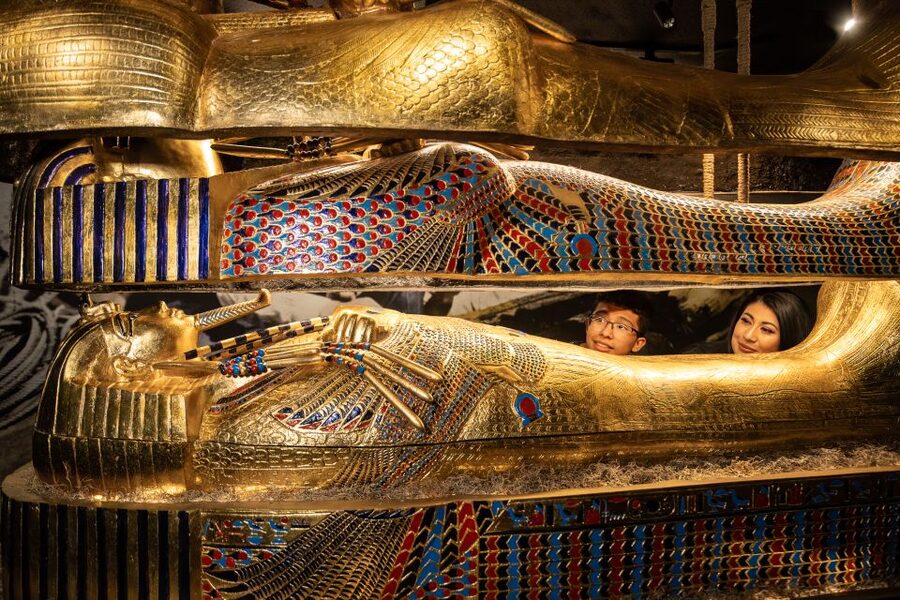
The treasures were reproduced by expert Egyptian craftsmen in consultation with Egyptologists. This gives you access to the shapes, colors, scale, and arrangement of the objects while protecting fragile originals from handling and transport.
That choice also lets the exhibit rebuild the tomb as a complete scene. If the original objects were present, the display would face strict limits. Replicas make it possible to show the burial space in a more direct way.
I find this especially useful for families and first-time visitors. You can spend time looking at the statues and artifacts instead of simply moving past them. Children may also find the copies less intimidating than objects presented behind thick glass, though adults must accompany anyone under 18.
The copies cannot replace original artifacts, and that is the fair criticism. If your main goal is to see genuine ancient objects, a museum collection may suit you better. If you want to understand how the tomb looked as a whole, the replicas serve the purpose well.
How much does the $40 ticket buy you?
Admission costs $40 per person. That is a significant price for a single exhibit, especially in Las Vegas, where many attractions compete for your entertainment budget.
The value depends on how you visit. If you spend only a few minutes taking in the largest statues, the ticket will feel expensive. If you read the explanations, follow Carter’s story, and study the tomb reconstruction, you get a more substantial cultural stop.
I would compare this with the price of a museum admission or a short show rather than with a free hotel display. You are paying for the exhibit’s production, the replica work, the media presentation, and the chance to see the tomb recreated as a complete archaeological scene.
The ticket is easier to justify if you already plan to spend time at the Luxor. There is no separate transport plan, excursion vehicle, or full-day schedule to arrange. You can build the exhibit into a hotel visit and then decide how much time you want to give it.
The activity is valid for one day, but that refers to the admission date rather than a stated visit length. Check the available starting times when booking, and remember that the exhibit operates from 10:00 am to 8:00 pm with final admission at 7:00 pm.
The best time and pace for your visit
The broad opening hours give you useful flexibility. A morning visit can work well if you want a quiet start to a day of sightseeing, while an evening visit lets you place the exhibit around meals, shows, or other attractions on the Strip.
The information supplied does not give a set tour duration or a required entry slot. Check the booking calendar for the starting times offered on your date, then allow enough time to read rather than treating this as a five-minute photo stop.
I would avoid arriving at 6:55 pm. Last admission is at 7:00 pm, and a history exhibit loses much of its value when you feel hurried through the final section.
The exhibit is wheelchair accessible. Children age 3 and under enter free without a ticket, while anyone under 18 must attend with an adult. These rules make the attraction workable for families, but adults should be prepared to guide younger children through material about burial customs and death.
Who will enjoy this most?
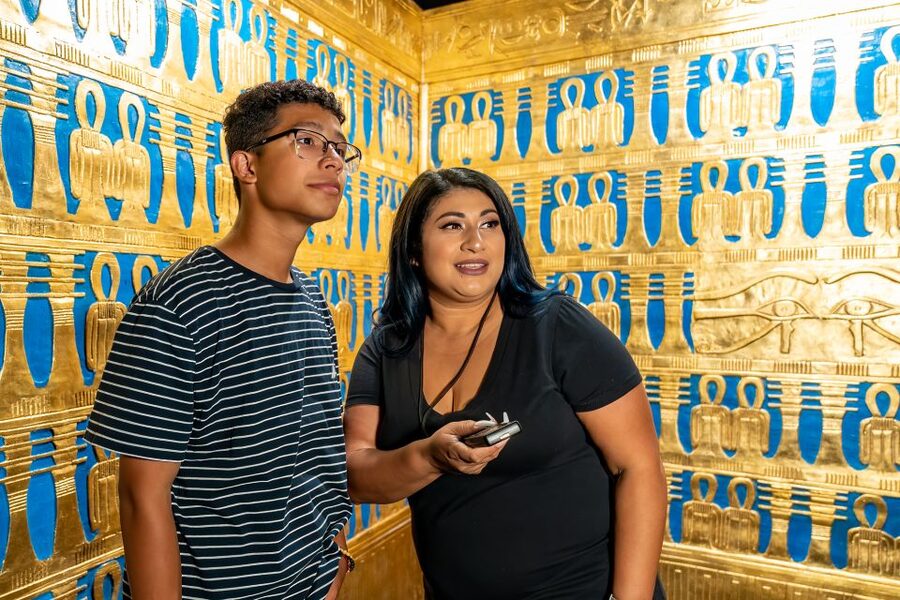
This experience suits you if you enjoy archaeology, ancient cultures, museum displays, or famous moments in exploration. It is also a good choice if your Las Vegas plans include the Luxor and you want an activity that is calmer and more educational than a casino or stage show.
Families can use it as an introduction to ancient Egypt. The visual recreation gives children something concrete to see, while the Carter story adds a sense of mystery and discovery.
It also works for adults who already know the basic story of King Tut. The exhibit’s strength is not a surprise ending. You already know the tomb was found. The interest comes from seeing the burial site reconstructed and understanding the culture behind it.
You may want to skip it if you are looking only for original artifacts or a live archaeological expert. No guide names or live commentary are provided, and the objects are replicas. Those limits do not ruin the experience, but they are important when deciding if $40 is right for you.
How it compares with other Luxor attractions
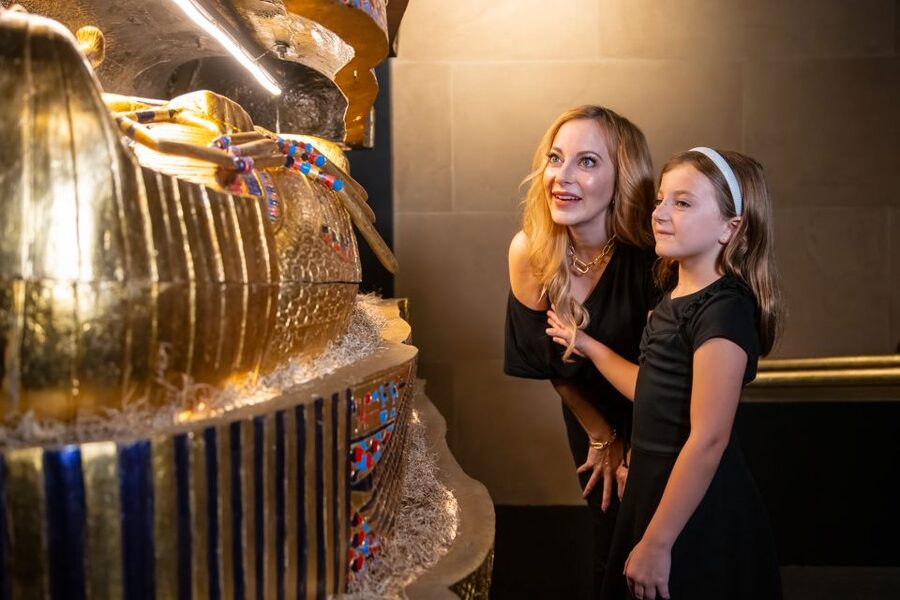
The King Tut exhibit is a history-focused option within a hotel known for themed entertainment. The subject is ancient Egypt, but the format is modern, with media, reconstructed spaces, and carefully made objects.
That makes it different from a conventional museum. You are not simply entering a gallery and moving from case to case. The exhibit builds a sequence: ancient beliefs, Carter’s search, the excavation, and the tomb itself.
It is also different from a thrill-based Las Vegas attraction. The pace is slower, and the reward comes from looking closely and making connections. If you want a quiet change from rides, casinos, or loud productions, this can fill that role.
The best comparison is with the Titanic exhibit at the Luxor, which also centers on artifacts and a historical story. Choose King Tut if ancient Egypt, archaeology, and tomb discovery appeal more to you. Choose another attraction if you prefer modern history, live performance, or a more dramatic ride format.
Practical advice for making the most of it
Before entering, decide what you want from the visit. If you are interested in archaeology, plan to read the material in both sections. If you are with children, explain that the exhibit shows a burial site and that some displays may concern death and the afterlife.
Give the first section proper time. The tomb recreation has the strongest visual pull, but the earlier material tells you how to read what you see later.
Look at the arrangement of objects, not only the most striking statue. The display is designed to show how the tomb looked as a whole, and that larger view is one of the main reasons to visit.
Keep the replica status in mind without treating it as a flaw. The copies are what allow the exhibit to present the scene in a complete and accessible way.
Finally, plan around the closing time. The exhibit is open daily from 10:00 am to 8:00 pm, but admission ends at 7:00 pm. Since the activity is non-refundable, check your date and timing before you commit.
Should you book Discovering King Tut’s Tomb?
Book it if you want a focused ancient Egypt attraction with a clear story, strong visual displays, and a full reconstruction of Tutankhamun’s tomb. The careful replicas of the statues and artifacts are the biggest reason to go, while the Carter section gives the visit a human thread.
At $40, I would not buy the ticket casually for a rushed visit. Set aside time to explore both sections, and you will get more from the price. If you prefer original artifacts, a live guide, or a short attraction with instant thrills, choose something else.
For an educational stop at the Luxor, especially with children or anyone fascinated by archaeology, this is a sensible pick. It offers a close look at one of history’s most famous discoveries without pretending that replicas are the real treasures.
FAQ
Where is Discovering King Tut’s Tomb located?
The exhibit is located at the Luxor in Las Vegas, Nevada, United States.
How much does admission cost?
Admission costs $40 per person.
Is this a live guided tour?
The experience is presented as a virtual and exhibit-based visit. No live guide or named guide is specified.
What does the exhibit include?
Your admission includes entry to the Discovering King Tut’s Tomb exhibit.
What will I see inside?
You will see information about ancient Egyptian culture and beliefs, the story of Howard Carter’s discovery, replicas of Tutankhamun’s treasures, and a three-dimensional recreation of the excavation site and tomb.
What are the opening hours?
The exhibit is open daily from 10:00 am to 8:00 pm. Last admission is at 7:00 pm.
Is the exhibit wheelchair accessible?
Yes, the experience is wheelchair accessible.
Can children attend?
Yes. Children age 3 and under enter free without a ticket. Anyone under 18 must be accompanied by an adult.
New on the Las Vegas list
- Latin Nightclub Tour by Party Bus w/ Fast-Pass Entry★ 3.5 · 3 reviews
- Death Valley an Mojave Desert VIP Small Group Tour Las Vegas★ 4.5 · 3 reviews
- Las Vegas: Guided Off-Road UTV Driving Adventure★ 5.0 · 3 reviews
- Las Vegas Mexican Salsa Cooking Experience with Celebrity Chef★ 5.0 · 3 reviews
- UTV Valley Of Fire Exploration Full Day Tour★ 5.0 · 3 reviews
- Combo Tour: Valley of Fire & Hoover Dam Full-Day Tour★ 5.0 · 3 reviews
- Grand Canyon West, Hoover Dam Photo Stop and Optional Skywalk★ 5.0 · 3 reviews
- Los Angeles, Hollywood, Santa Monica Tour from Las Vegas★ 3.5 · 3 reviews
Casino Shows & Attractions, compared.

Lower Antelope Canyon and Horseshoe Bend Day Tour with Lunch
Read our review →
Las Vegas Strip: The High Roller at The LINQ Ticket
Read our review →
High Roller Wheel Admission Ticket at The LINQ
Read our review →
The Mentalist at Planet Hollywood Hotel and Casino
Read our review →
Antelope Canyon & Horseshoe Bend with Lunch, WiFi
Read our review →
Grand Canyon, Antelope Canyon, Horseshoe Bend
Read our review →

Antelope Canyon & Horseshoe Bend from Vegas, Lunch, Free WiFi
Read our review →Browse the lists this tour appears in